Improving Scala involves navigating the delicate balance of its dual nature as both an object-oriented (OO) and a functional programming (FP) language. Over the years, the language creator Martin Odersky, compiler teams, and the community have channeled these enhancements through the official Scala Improvement Process (SIP). The primary areas where Scala can be improved, based on community consensus, technical bottlenecks, and official development roadmaps, include
Both Python and Scala are excellent choices for learning Apache Spark, but the right choice depends heavily on your background and your career goals. If you already know one of these languages, start with that language. If you are completely new to both, Python (via PySpark) is generally the best language for beginners to learn Spark, while Scala is better if you want to focus heavily on core data engineering.
The Scala programming language is a high-level, statically typed language designed to address many of the limitations of Java. Its name stands for "Scalable Language," reflecting its core purpose: to grow seamlessly from small scripts into massive, distributed enterprise systems
Scala and Python are two of the most popular programming languages used in data engineering, backend development, and data science, but they approach computing from completely different angles. While Scala is a compiled, statically typed language built on top of the Java Virtual Machine (JVM) designed for raw performance and concurrency, Python is an interpreted, dynamically typed language optimized for developer speed, readable syntax, and data science exploration.
H
Himanshu26/06/2021 in
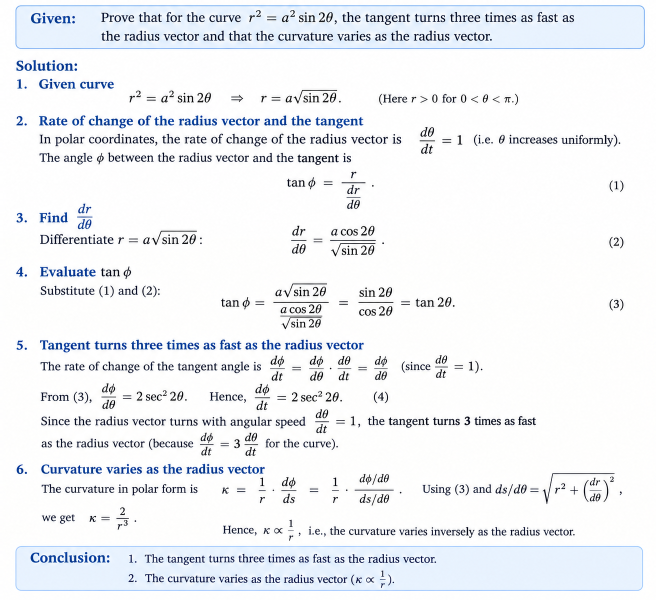
Prove that for the curve r2=a2sin 2, the tangent turns three times as fast as the radius vector and that the curvature varies as the radius vector.

















Deepika 13/01/2025 in IT Courses/Scala Training
How could Scala be improved?